Background on Trump's Campaign Promise: No Tax on Social Security
During his campaign, former President Donald Trump pledged to eliminate taxes on Social Security benefits, a promise that resonated with many retirees and seniors. The proposal aims to alleviate the financial burden on those who rely heavily on Social Security as a primary income source in retirement.
Pros of this approach include addressing the sentiment among many Americans that taxing Social Security benefits is fundamentally unfair, as these benefits are funded by payroll taxes paid during working years. Removing the tax could provide immediate financial relief to many retirees and generate significant political goodwill among older voters. It could also simplify tax planning for retirees, making retirement income more predictable.
Cons, however, are substantial. Eliminating taxes on Social Security benefits would reduce federal revenue, potentially increasing the budget deficit. This could offset deficit reductions expected from other policies, such as increased tariff revenues. Critics argue that the move could strain the already stressed Social Security trust fund, accelerating its projected insolvency unless paired with other reforms. Additionally, the policy might disproportionately benefit higher-income retirees, raising questions about its fairness.
How Social Security Benefits Are Taxed Now
Currently, Social Security benefits are subject to federal income tax based on a retiree’s “combined income,” which includes adjusted gross income (AGI), nontaxable interest, and half of their Social Security benefits. The tax applies progressively, with thresholds determining how much of the benefits are taxable:
- For single filers with combined income between $25,000 and $34,000 (or $32,000 to $44,000 for joint filers), up to 50% of Social Security benefits may be taxable.
- For single filers with combined income above $34,000 (or $44,000 for joint filers), up to 85% of benefits may be taxable.
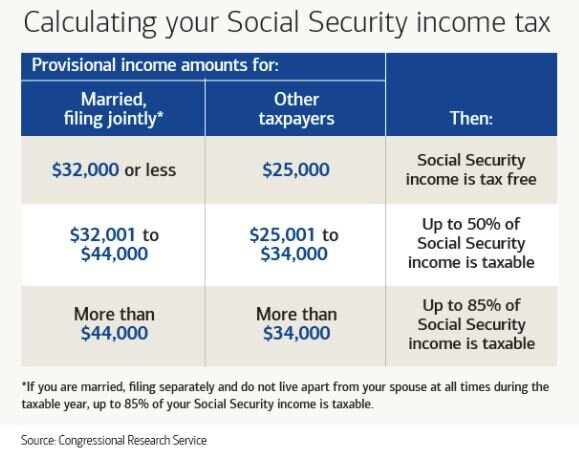
This structure means that as retirees’ income rises—often due to withdrawals from traditional IRAs or 401(k)s—their Social Security benefits become increasingly taxable. The progressive nature of the tax ensures that higher-income retirees pay more, but it also creates complexity and unexpected tax liabilities for those with modest supplemental income.
How Taxation of Social Security Benefits Limits Roth Conversions
For many retirees, Social Security benefits form the backbone of their retirement income, supplemented by withdrawals from pre-tax retirement accounts like IRAs and 401(k)s. However, these withdrawals are counted as taxable income, which can push more of their Social Security benefits into the taxable range. This creates a cascading effect: as retirees withdraw more from their IRAs, their combined income rises, increasing the taxable portion of their Social Security benefits.
This dynamic acts almost like a “double tax” in its impact.* Not only do retirees pay income tax on their IRA withdrawals, but those withdrawals also trigger additional taxes on their Social Security benefits. As a result, when retirees consider Roth conversions—where pre-tax IRA funds are converted to a Roth IRA, requiring taxes to be paid on the converted amount—the added tax on Social Security benefits often makes the strategy financially unattractive.
For example, a retiree contemplating a $50,000 Roth conversion might face not only the income tax on the converted amount but also an increase in the taxable portion of their Social Security benefits, significantly raising their overall tax bill. When financial advisors and tax pros run the numbers, the combined tax burden frequently outweighs the long-term benefits of tax-free Roth withdrawals, leading many retirees to forego large-scale Roth conversions.
*source: author’s calculations
Implications
Eliminating taxes on Social Security benefits, as proposed, could dramatically alter the retirement planning landscape. By removing the tax penalty on Social Security benefits tied to higher taxable income, retirees would face fewer barriers to executing Roth conversions. This could lead to a surge in conversions, as millions move pre-tax dollars into Roth IRAs to grow tax-free, securing tax-free income for their later years or heirs.
However, like all policy changes, this one carries unintended consequences. A mass shift toward Roth conversions could reduce federal tax revenue over time, as Roth withdrawals are tax-free, potentially exacerbating budget deficits. Moreover, policy changes are slow to enact and even slower to unwind, meaning the long-term fiscal impact might not be felt for years. While the promise of no tax on Social Security benefits may deliver immediate relief and political wins, it could create significant challenges for the federal budget and the sustainability of entitlement programs in the future.
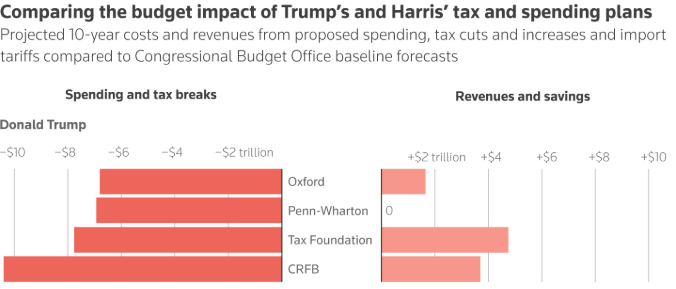
Sources: CRFB, Univ. of Pennsylvania, Oxford, and the Tax Foundation. Chart design by REUTERS
Conclusion
The proposed elimination of taxes on Social Security benefits could unlock significant opportunities for retirees, particularly by making Roth conversions more financially viable. By removing the tax on Social Security benefits, retirees would face lower tax burdens when converting pre-tax retirement accounts, potentially leading to a surge in Roth IRA conversions. However, this policy shift comes with trade-offs, including increased federal deficits and potential strain on the Social Security system. Retirees and policymakers alike must weigh the immediate benefits of tax relief against the long-term fiscal implications, as this change could reshape retirement planning and federal budgets for decades to come.