Founder Money Podcast — Episode 3 | by Curtis Hearn, CFP, CEPA, MBA
Watch/listen on your favorite platform: Spotify | Apple Podcasts | YouTube
Why Retirement Planning Is Harder for Business Owners
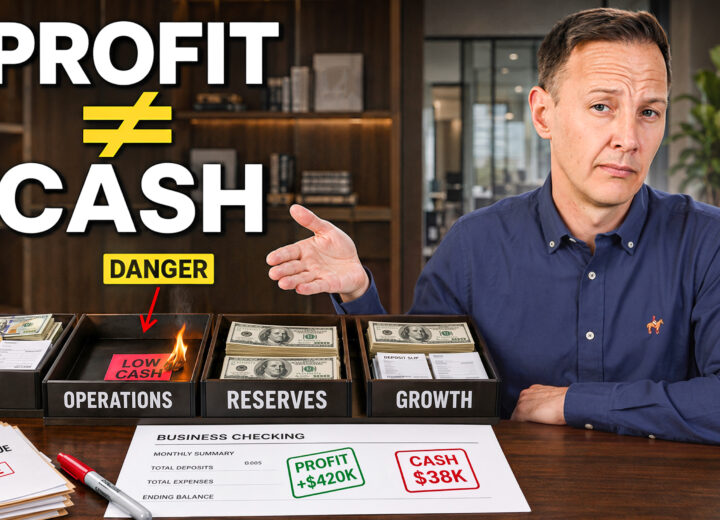
We all know retirement planning is more complicated for business owners. But why? Your business is an entire extra layer of more: more decisions, more opportunities, more things to learn, and more ways for things to go sideways. Here are three simple examples. First, you have more things pulling at your cash flow. Most people are trying to balance three or four financial goals. If you’re like most entrepreneurs, you’ve got about twenty. Regular retirees might feel like there’s never enough to go around. For business owners, there really isn’t, especially once you factor in Uncle Sam, who is always salivating after you’ve had a good year. Second, you have two major vehicles to invest in, not one. A traditional saver can automate 15% into a 401(k), make some sound investment decisions, and end up with a successful retirement. Business owners have to invest both inside and outside the business. How do you split your attention and your dollars between the two? Third, figuring out your return on investment inside the business is not straightforward. Traditional savers can make reasonable assumptions about investment returns simply by looking at historical averages. You can’t do that with a small business. You can make assumptions about revenue growth, profit, and so on, but that doesn’t tell you what the business is actually worth. Getting to that number requires a deep dive that combines accounting savvy, M&A research, and a strong understanding of the broader investment landscape. Traditional advice doesn’t factor any of this in, which leads to a very common scenario I see all the time. You hear the standard advice, and you try to follow it: invest 10% to 15% in outside investments while also funding your business. Then reality interrupts. As any founder who has been in the game more than two seconds knows, starting a business usually means years of sacrifice, living on rice and beans, and funneling any extra income right back into the business. We call our businesses our babies for a reason, and it’s not just because we love them. It’s because they are constantly needy, especially at the beginning. It takes a long time before a typical small business can distribute any cash back to its owners at all. So the common scenario is this: you hear the traditional retirement advice, think “this doesn’t apply to me at all,” scrap it, and pour everything into your business. You’ve effectively put all your retirement eggs in one basket. In practical terms, you’re banking on one day cashing in on all that hard work by selling the business to fund retirement. When we do this, we conveniently ignore sobering statistics like this one: according to SCORE, only about 20% of businesses that go to market can be sold at all [1]. This is the game we’ve chosen to play, and traditional retirement advice doesn’t have much helpful to say about it. So let’s talk about a completely different framework that does. Here is a six-step system for finding the balance between investing in your business and investing outside of it, so your business can grow without leaving your future completely exposed.A Six-Step Retirement Framework Built for Business Owners
Step 1: Make a Profit
The first step sounds obvious, but it’s here for a reason. Everything we’re about to discuss (the investments, the projections, the retirement strategy) doesn’t matter if you’re in the red every month. As the saying goes, if you’re losing money on every watermelon, the last thing you should do is get a bigger truck. So step one is to make your business profitable, and to do it quickly. Obvious does not mean easy. It takes the average business about three years to show a consistent profit, and 40% of businesses don’t survive long enough to get there. Getting there takes more than putting your head down and grinding harder. It requires getting honest about some key drivers:- Do you have a clear ideal client profile, and are you solving real problems for that group of people?
- Are you pricing high enough relative to the value you deliver?
- Have you cut all non-essential expenses?
- Are you marketing aggressively and efficiently?
- Have you fine-tuned your sales pitch to what actually works with your ideal client?
Step 2: Build Your Safety Net
It’s no surprise that businesses are risky. According to the Bureau of Labor Statistics, one in five businesses doesn’t survive the first year, and one in two doesn’t make it past five years [2]. And of the rare ones that make it beyond that, most are never able to be sold to fund anyone’s retirement dreams. If your financial plan relies on selling your business one day, you are walking a tightrope a thousand feet in the air with no net below. If you make it across, it’s incredible. If you fall, it’s not going to be pretty. So step two is to build the safety net that keeps you from complete financial disaster. Your safety net is a pool of personal investments that exists completely outside your business. The goal here isn’t to fund your dream retirement. It’s simply to give you something to land on if things don’t go as planned. I won’t go into a lot of detail here because it’s beyond the scope of this episode, but your safety net should probably include a variety of accounts and strategies:- Cash and money market funds for emergencies and slowdowns
- Diversified stock, bond, and mutual fund holdings in taxable brokerage accounts, for flexibility
- Traditional retirement vehicles like 401(k)s, SEP IRAs, and SIMPLE IRAs
- Roth IRAs, where your money can potentially grow tax-free for decades
A Quick Sidebar: Taxes and Cash Flow
Before we go on to step three, I’m assuming you’ve already taken care of two other pesky issues that keep business owners up at night. Taxes. If you’re like me, you hate paying them. Nobody wants a freeloader named Uncle Sam taking a huge bite out of everything they do. If you’re making a healthy profit, you need to know how to reduce your taxes legally, and you need a plan to set the money aside and pay it at the right time so you stay in the IRS’s good graces. Cash flow. Many small businesses have lumpy or seasonal cash flow, and once you add in capital expenditures and other major expenses, it can be hard to keep things under control. For the purposes of this framework, I’m assuming you’re on top of both. If either one is a pain point, my team helps entrepreneurs with these issues all the time.Step 3: What Type of Business Owner Are You?
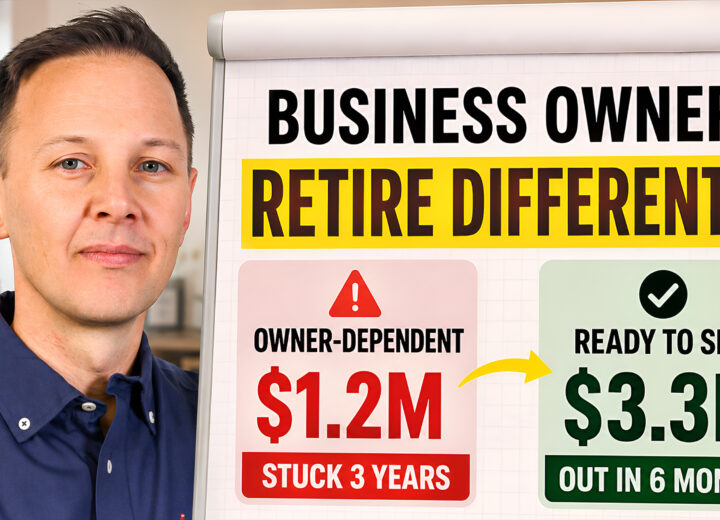
This next step is one most traditional retirement calculators completely skip, but for you it’s one of the most important questions you’ll answer about your financial future. There are basically two types of business owners, and your retirement strategy looks meaningfully different depending on which one you are. Credit for these categories goes to John Warrillow, author of several business books, who has done decades of research on small business owners across the U.S. [3]. The craftsman. The first type, and the vast majority of small business owners, is the craftsman. These are people who are incredible at what they do. They have a very particular set of skills, if you will. This is the programmer who just wants to program, or the writer who just wants to write. They don’t care much about scaling. They want flexibility with their time, the ability to scale their income, and the freedom to do the work they love on their own terms. The business is usually a one-person shop where they work directly with clients, maybe with a few employees handling administrative work. The business is truly centered on them, and they prefer it that way. If they left or retired, the business would simply cease to exist. The freedom fighter. The second type values freedom and independence over everything else. Freedom fighters may start as craftsmen, but they often grow beyond that quickly. In pursuit of freedom, they prioritize scaling so the business itself becomes a growing asset, not just a source of income. They want to own a business, not a job. They hire employees or contractors to do the majority of the work so their own time is freed up. There’s control, but not dependence. The business is their ticket to the lifestyle they want, and when they decide to sell, it’s also their ticket to financial independence. Before you go any further in this framework, you need to know which type you are and which type you want to be. Some craftsmen want to grow into freedom fighters. Some freedom fighters realize that wasn’t the right path and want to go back to being craftsmen. There’s no right or wrong, only what’s best for you. But the answer changes how you think about the rest of your long-term plan. If you’re a craftsman and plan to stay that way, your next step is simple: invest outside the business. If the business is entirely dependent on you, it isn’t a sellable business, and it’s not going to become one. Your wealth-building tool is not the business itself but the profit you make from it. To accelerate, increase profit as much as possible, take distributions, and invest those dollars outside the business. For freedom fighters, the strategy is more complex. Every dollar comes with a decision: put it back into the business to grow it as an asset, or pull it out to build personal wealth. If this is already clicking for you, good. We’re about halfway through, and the next two steps are where things really start coming together.Step 4: Run the Numbers
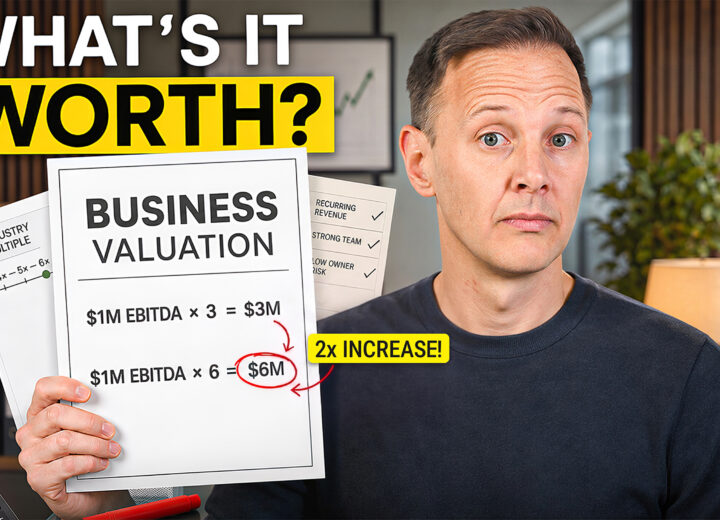
As a financial advisor, this is my favorite part. I get to run scenarios and analyze opportunities for clients. But even more exciting, it’s where things start to feel tangible. You can begin to see the path toward the life you’ve dreamed about. I’m going to walk you through a small taste of how to do this yourself, using the free Financial Freedom Calculator for Founders on our website. In a nutshell, you enter your own numbers and estimates for things like living expenses, outside investments, and your business, and it estimates how big a nest egg you need to walk away, including what happens if you sell your business when you exit. It also shows how small adjustments, like investing more or reducing taxes on the sale, can help you reach your goals faster. To see how the pieces fit together, let’s use a fictional entrepreneur named Burnt Out Benny (or, for equal opportunity, Burnt Out Betty). Benny is burnt out. He’s lost the glimmer in his eye when he gets to the office in the morning, and putting out fires all day has become a lot less appealing than it used to be. Benny is starting to dream about beaches and bygone pastimes. Benny’s goals. First, we enter Benny’s financial independence goals. What age does he want to exit? How much does he want to spend in retirement? He can dream big here, because we can always adjust later. In step two we were building a safety net just to survive; here we’re loosening our belts and planning for the Wagyu steak and Mai Tais. Benny doesn’t look a day over thirty, but for this example he’s 55 and wants to exit at 60. Truthfully he’d exit tomorrow if he could, but he knows that’s not realistic. To keep it simple, we’ll put in $100,000 a year for household living expenses. His kids are recently out of college and off the payroll, and the house is paid off, so that’s a reasonable starting place. Using the 4% rule and a rough income tax estimate, the calculator arrives at a financial independence number of $4.5 million at age 60. For simplicity, we’re excluding Social Security and assuming 3% inflation. That’s Benny’s initial target. Benny’s outside investments. Now let’s see whether he’s on track. Benny has $250,000 in his 401(k) and $100,000 in a Roth IRA. His wife has a 403(b) and an IRA totaling $350,000. So total investments come to $700,000. They’re both adding to their retirement accounts to the tune of $2,500 a month, and we’ll keep the suggested 8% rate of return. With that information, Benny’s $700,000 is on track to grow to about $1.2 million by the time he wants to exit. Benny’s business. Now for the meat and potatoes. Benny starts by entering an estimated value for the business. If he isn’t sure what it’s worth, he can guess, but business owners are notorious for being wildly off when estimating the value of their own companies. It’s just too hard to be objective about your own baby. So if you haven’t had a formal valuation recently, I recommend the free business valuation tool on our site. It gives you an estimate using real industry data, and it only takes 10 to 15 minutes. Feel free to enter a guesstimate for now, but remember: garbage in, garbage out. It’s worth a few extra minutes to get an accurate starting point. Benny had a formal valuation done last year, which pegged the business at about $3 million. Since he doesn’t have a good way to measure how fast his business’s value is growing, we’ll use the default 4% growth rate. As a side note, it is possible to measure and grow your business’s value, and in many cases you can grow value without growing revenue at all. (More on that in step five.) We also enter his ownership percentage. Benny is the sole owner, so 100%. If he had a partner, we’d enter a lower number. What Benny actually walks away with. Finally, we figure out how much Benny keeps when he sells. If you have debt in the business, it will almost certainly be paid off at closing, so we subtract it. Benny has $50,000 in truck loans. For taxes, if you know your cost basis, it will affect how the calculator estimates taxes on the sale. By default, the calculator uses the highest ordinary income rate, but you can adjust it down if you think that applies to you. As always, none of this is tax, legal, or investment advice, so please talk to a pro before making important decisions. For this example, we’ll enter $50,000 in debt, a zero cost basis, and leave the default 37% tax rate with no state taxes. And we’re done. Unfortunately, the calculator shows that Benny’s plan may come up a bit short. His projected take-home proceeds from selling the business are about $2.3 million. Combined with his outside investments of about $1.2 million, that’s a total of about $3.5 million, versus his goal of $4.5 million. That leaves a gap of about $1 million that Benny needs to close if he wants to walk away at 60.Step 5: Know Your Levers
All of this leads to step five. Once you find your gap, you don’t panic. You pull levers. There are three key levers that help close the gap. Lever one: more time. You can delay your exit by a few years, giving your business and your investments more time to grow. For Benny, waiting seven more years would close the gap, letting him walk away at 67. Lever two: more money. You can increase your investments outside the business. In Benny’s case, he’d have to add $16,000 a month to his investment portfolio to hit his number by age 60. This illustrates the classic trap so many founders fall into: by the time the business is profitable enough to pull sizable amounts out for investing, the entrepreneur is too old to take full advantage of compounding. I talk about this extensively in my book, The Entrepreneurship Trap. Lever three: more value. You can grow the business’s value. This lever has the most potential and is the most practical path for most founders. It isn’t easy, but by making strategic improvements, many small businesses can double in value without adding a dollar in sales. Shoring up key areas like accounting practices, standard operating procedures, company culture, and removing owner dependencies makes the business more attractive to investors, and therefore more valuable when you go to sell. This is the heart of exit planning. Let’s play with Benny’s levers:- If we increase the growth rate on the business’s value from 4% to 12%, he can sell at 60 and walk away.
- Maybe $16,000 a month feels unreasonable, but he can do $5,000 a month. That one change means the business only needs to grow at 10% instead of 12%.
- Or maybe Benny is fine retiring at 62 while saving $5,000 a month. Now the pressure is really off the business, which only needs to grow about 7% a year.
Step 6: Adapt and Adjust
Once you’ve decided which levers to pull and how hard to pull them, it’s time for step six. I’ve been a financial advisor for more than twenty years, and there’s one thing I can absolutely guarantee: your plan today is not going to be your plan in five years. It may not even be your plan in five months. Life is constantly changing, and so are your finances. Markets perform differently than expected. Your business has a huge run-up. You have another kid, move states, or buy a house. Your plan needs to adapt as your life and your goals change, and that’s okay. That’s why, as helpful as I hope a calculator like this is, it’s probably not enough. If you’re serious about planning for your financial future, you need a professional to come alongside as a guide: someone who understands financial planning, investing, and small business, but most importantly, who knows you, your situation, your goals, and your family. Then you can go deeper, frame decisions correctly, and adapt as life changes, goals are refined, and your business grows. You need a team of professionals around you as you go. If you’re ready to explore what that looks like, give us a call.The Bottom Line
Wealth building for business owners isn’t a formula. It isn’t a simple internet calculator, and it runs a lot deeper than most people think. First, start with a profitable business. Next, build a personal financial safety net outside the business, because statistically most businesses don’t survive, much less sell for millions. From there, it’s about knowing what kind of owner you are: someone building a lifestyle business around your skills, or someone building an asset you can one day sell and walk away from. That distinction changes everything about where your money should go. Then, with the help of your professional team, you put together a plan. You run the numbers to find the gap between where you are and what you need. Once you have that, you choose the levers to pull to adjust course: reducing taxes, investing more, growing the business, or some combination. From there, you iterate and improve the plan year by year, because the version that fits you today won’t be the right version as life changes. The business owners who get this right aren’t the ones following the standard advice. They’re the ones who built a plan that accounts for the reality of what they do. Now you have what you need to be one of them. Ready to go deeper?- Run your own numbers with the free Financial Freedom Calculator for Founders
- Find out what your business is really worth with the free business valuation tool
- Read my book, The Entrepreneurship Trap
- Want personalized planning and someone to keep you on track as life changes? Start here to reach my firm, DeepRiver Wealth. Our focus is helping business owners just like you plan for exactly this.
- Subscribe to the Founder Money Podcast on YouTube so you don’t miss the next episode
Frequently Asked Questions
-
Why is retirement planning different for business owners?
Business owners have more demands on their cash flow, two places to invest (inside and outside the business), and a business whose value and return are hard to measure. Standard retirement calculators assume a steady paycheck and one employer, so they skip the questions that matter most to founders, including what happens when you exit.
-
Should I invest in my business or in my retirement accounts?
It depends on what type of owner you are. If your business depends entirely on you (a "craftsman"), it likely won't sell, so your wealth-building tool is the profit you take out and invest elsewhere. If you're building a scalable asset (a "freedom fighter"), every dollar is a trade-off between growing the business and building personal wealth, and running the numbers helps you find the balance.
-
Can I count on selling my business to fund retirement?
It's risky to make that the whole plan. According to SCORE, only about 20% of businesses that go to market actually sell, and Bureau of Labor Statistics data shows roughly half of new businesses don't survive five years. Selling should be the cherry on top of a plan that also includes personal investments outside the business.
-
How do I figure out my financial independence number as a business owner?
Start with what you want to spend each year in retirement and the age you want to exit, then estimate what your outside investments and your business sale (after debt and taxes) will be worth at that age. The free Financial Freedom Calculator for Founders walks you through it step by step and shows any gap.
-
What can I do if my retirement plan comes up short?
You have three main levers: more time (delay your exit), more money (invest more outside the business), or more value (grow what the business is worth). Many small businesses can increase in value without adding revenue by improving accounting, documenting processes, and reducing owner dependence. Often a combination of levers works best.
-
How do I find out what my business is worth?
Owners are notoriously inaccurate at estimating their own company's value, so a guess is a poor starting point. If you haven't had a formal valuation recently, the free business valuation tool gives you an estimate based on real industry data in about 10 to 15 minutes.
Sources
[1] SCORE. “The Current Rise in Small Businesses Being Sold Over the Next 10-15 Years.” Cites that only 20–30% of businesses that go to market actually sell. https://www.score.org/princeton/resource/blog-post/current-rise-small-businesses-being-sold-over-next-10-15-years
[2] U.S. Bureau of Labor Statistics, Business Employment Dynamics program. Establishment survival data shows roughly 1 in 5 (about 20%) new businesses fail within the first year, and roughly half fail within five years. https://www.bls.gov/bdm/ and https://www.bls.gov/opub/ted/2024/1-year-survival-rates-for-new-business-establishments-by-year-and-location.htm
[3] Warrillow, John. Built to Sell: Creating a Business That Can Thrive Without You, and The Value Builder System™ research on business-owner psychographic profiles. The script’s “craftsman” and “freedom fighter” categories correspond to Warrillow’s published “master craftsman” and “freedom fighter” owner types. https://builttosell.com/
Disclosures
Advisory services offered through NewEdge Advisors, LLC, a registered investment adviser. This material is for educational and informational purposes only and is not intended as personalized financial advice. The strategies discussed may not be suitable for everyone. DeepRiver Wealth does not provide tax or legal advice. Please consult a qualified tax or legal professional regarding your specific situation.
Advisory services are only offered to clients where NewEdge Advisors and its representatives are properly licensed or exempt from licensure. Past Performance is no guarantee of future returns. Investing involves risk and possible loss of principal capital. No advice may be rendered by NewEdge Advisors unless a client service agreement is in place. The content of this article is developed from resources believed to be providing accurate information; however, neither DeepRiver Wealth nor NewEdge Advisors, LLC, guarantees the accuracy or completeness of any information obtained from any third party. The information in this material is not intended as tax, legal, or financial advice.